Tiles Popping or Tenting - Causes, Solutions & Prevention
Dislodged and cracked tiles, often accompanied by a popping sound, are a widespread issue for many homeowners. This problem can be highly frustrating and is typically caused by several key factors.
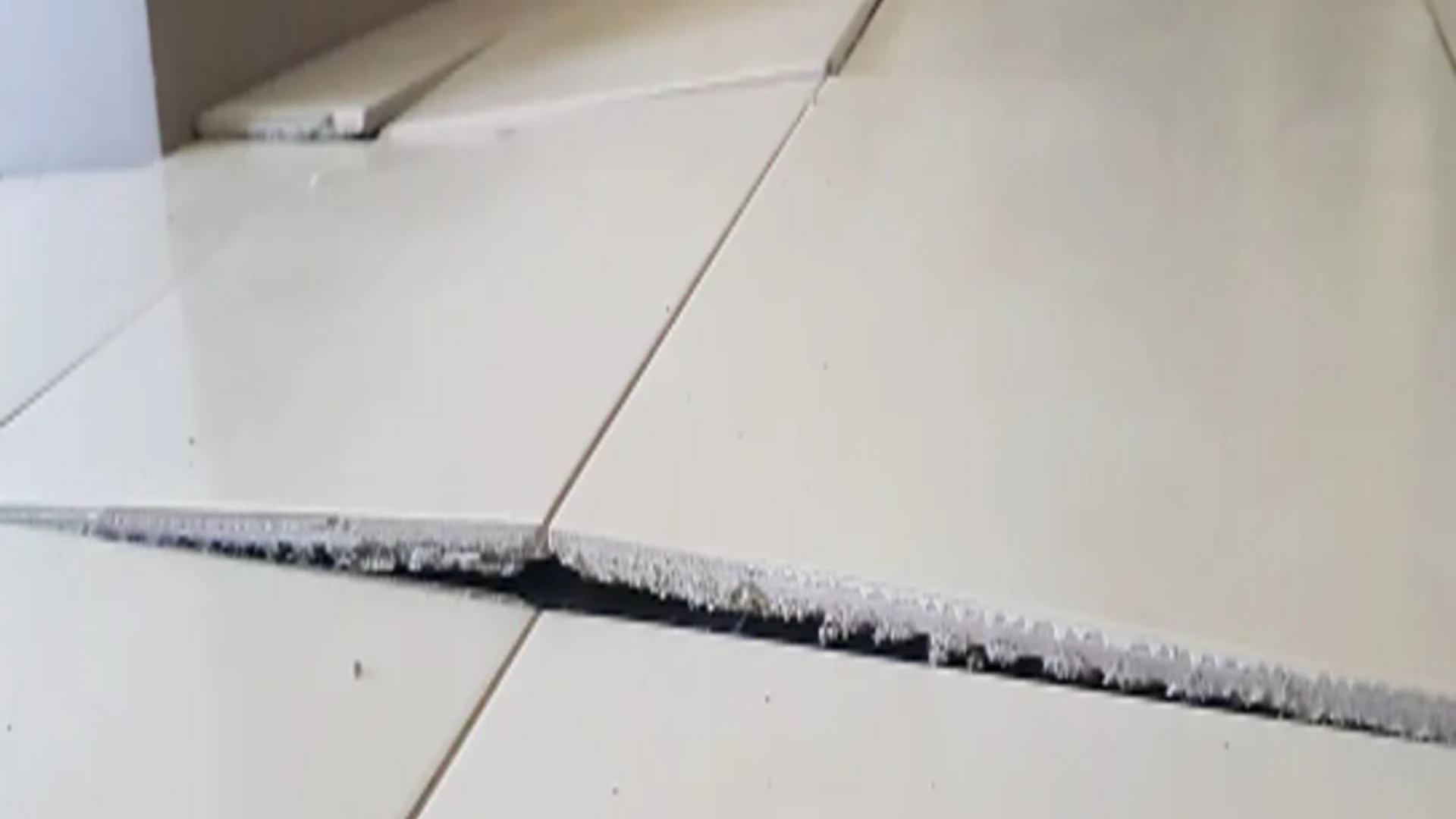
This problem can be highly frustrating and is typically caused by several key factors.
1. Poor tile fixing techniques
2. Weather changes
3. Moisture problems
4. Improper adhesion application
5. Substrate performance challenges
6. Wrong tile techniques
7. Improper curing time
8. Vibration or impact
Insurance often doesn’t cover damage from these instances. To prevent problems, ensure tiles are installed by professionals using high-quality products and techniques. Regular maintenance and prompt action on moisture issues can help mitigate the risk of tile damage.
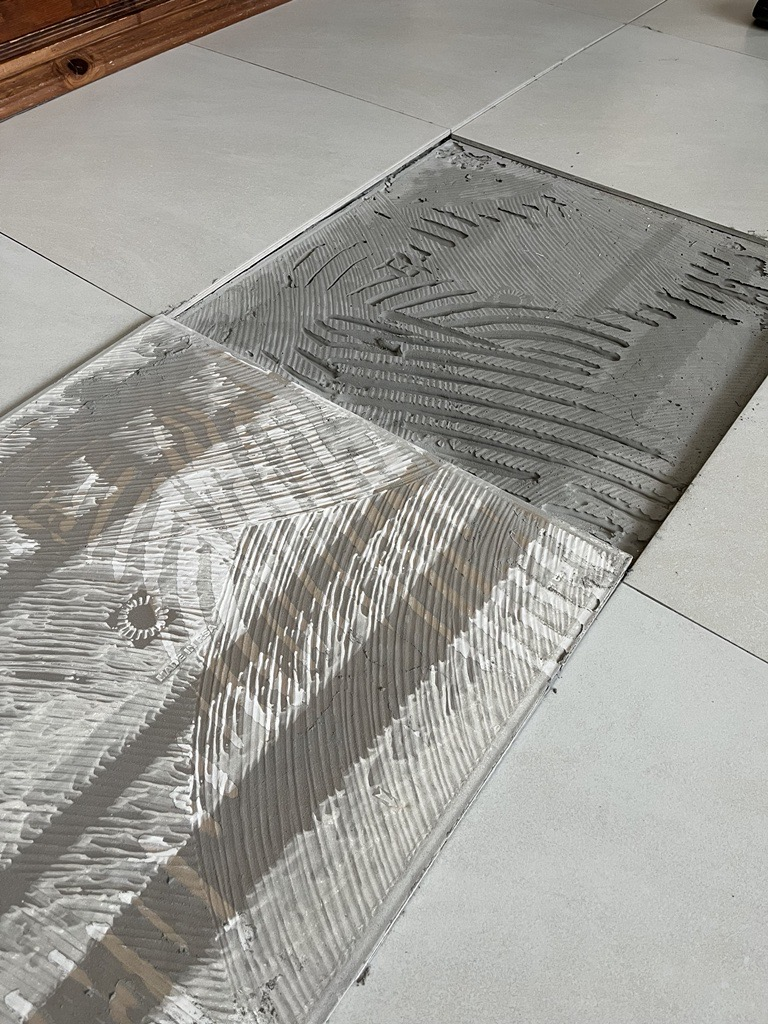
Selecting the right tile adhesive
The selection of the right adhesive is crucial and depends on factors such as the type of tile, substrate, and the installation environment.
Weber Tylon offers tile fixing solutions for professional tiling contractors, accommodating various setting times and tile types.
The Weber Tylon tile fixing range is versatile, easy to mix, and provides a strong bond for a long-lasting finish.
To prevent issues like dislodged or cracked tiles, it is important to follow the 3-step tiling solution.
Sathia Govender, Product Manager for Weber South Africa suggests: "Using Weber Tylon Plaskey and Key-it together ensures optimal bond and longevity of your tiling project, increasing adhesion by 70% and preventing tiles from detaching unexpectedly."
It's important to select the right adhesive for your tiling project. Weber Tylon offers a range of adhesives suitable for different tile types and project requirements.
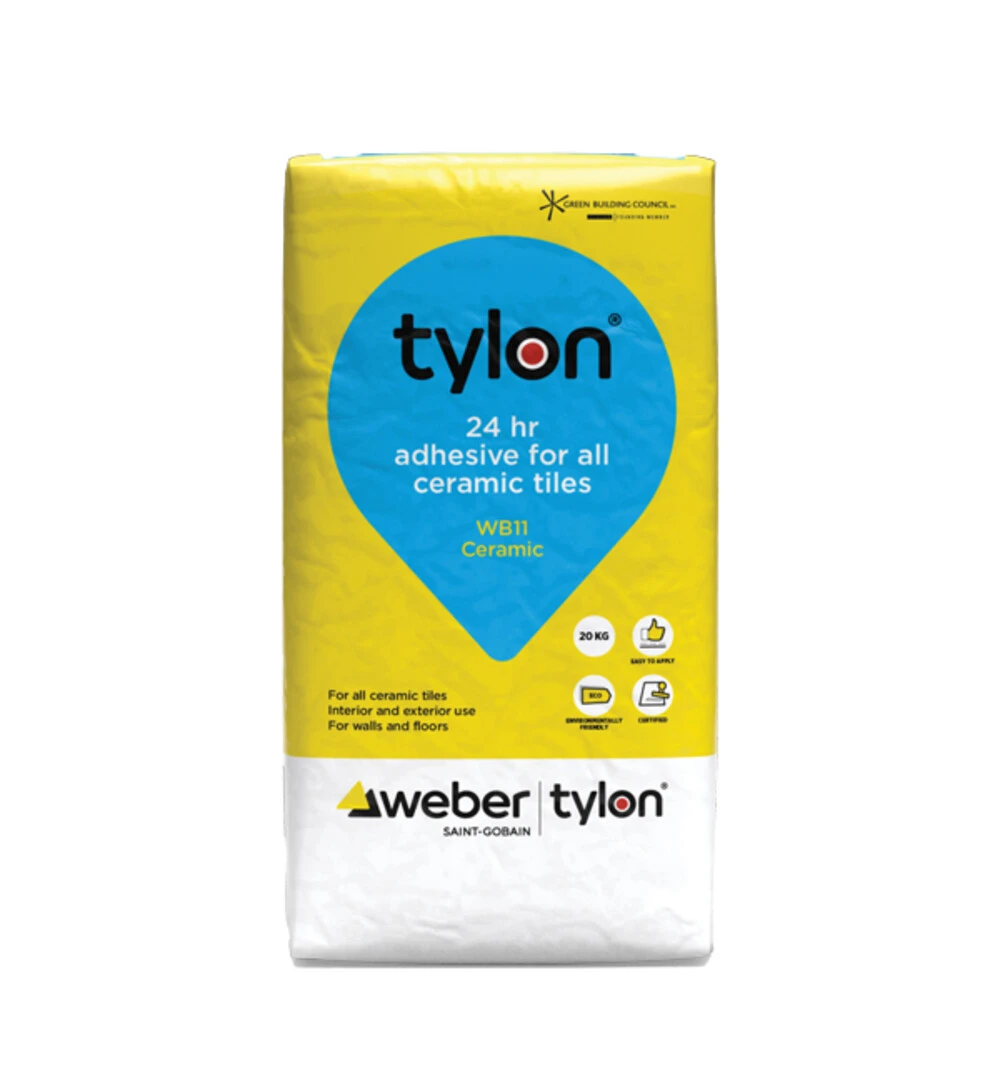
WB11 Ceramic
WB11 Ceramic - for lightweight or soft-baked glazed ceramic tiles.
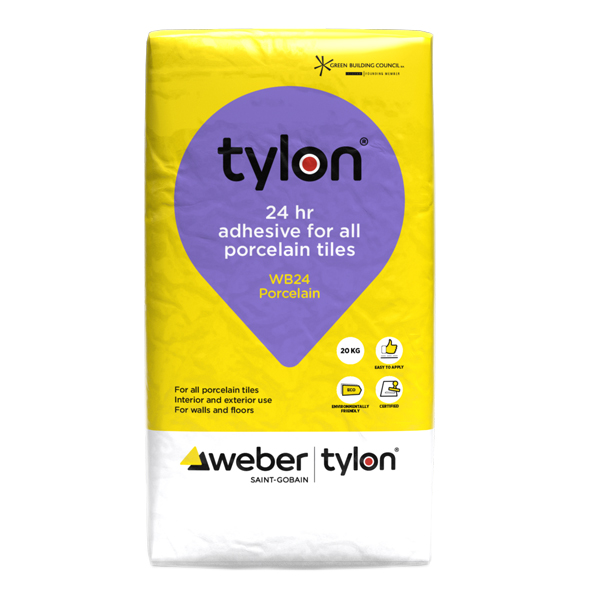
WB24 Porcelain
WB24 Porcelain – for small, large, and larger than ≤ 600 mm x 600 mm format porcelain tiles.
C1 Classification
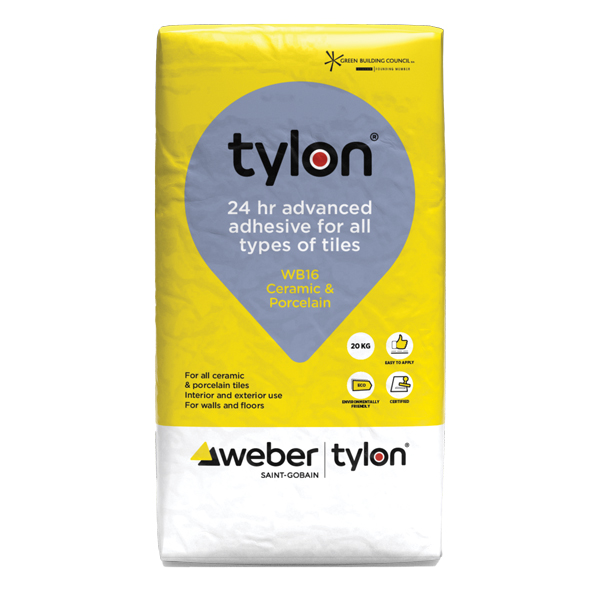
WB16 Ceramic & Porcelain
WB16 Ceramic & Porcelain – a 24-hour advanced adhesive for all types of tiles up to 600 x 600 mm and can be applied up to 20 mm thick.
C1 Classification
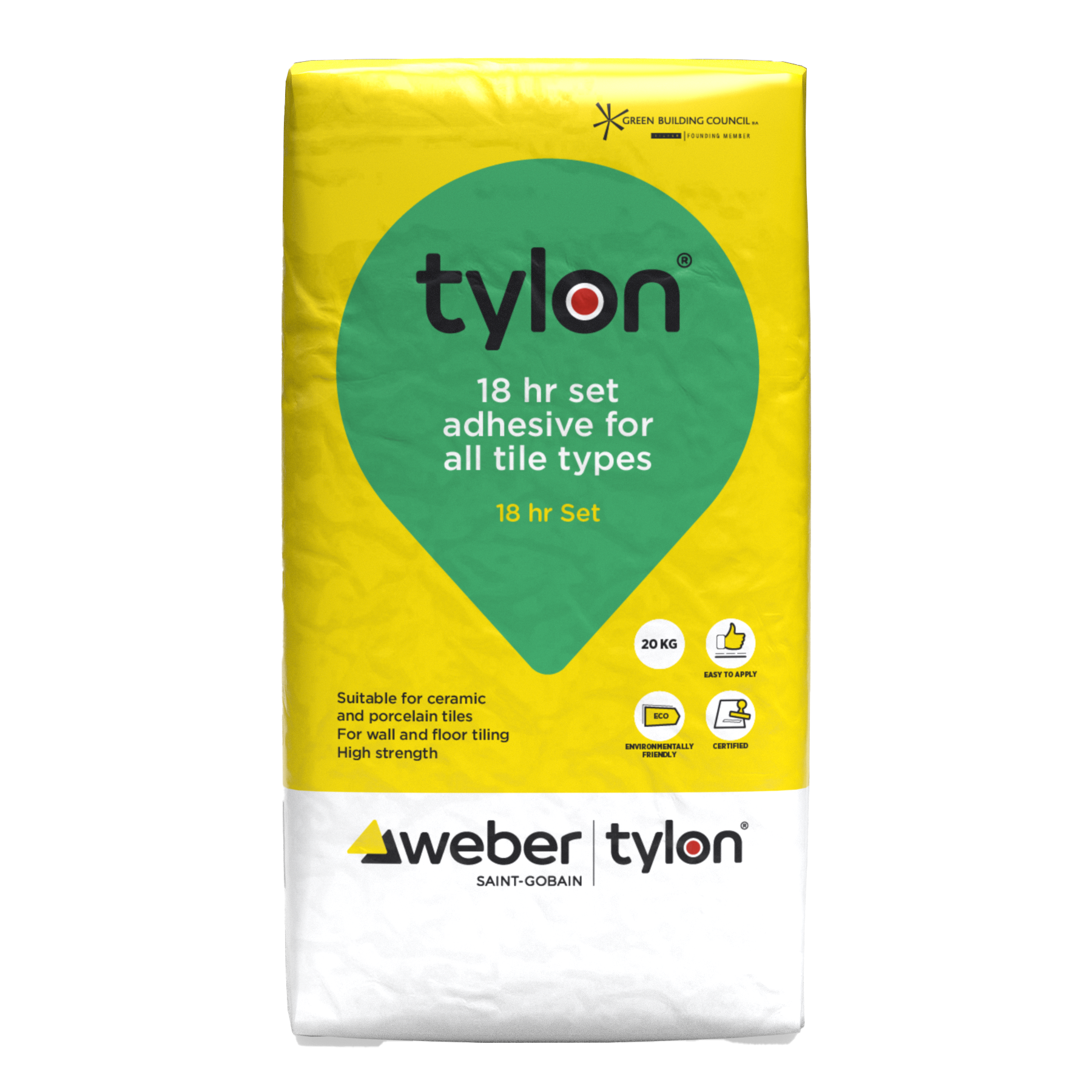
18-Hour Set adhesive
18-hour set adhesive is ideal for fixing porcelain, ceramic, clay, brick, cement, and natural stone tiles.
C1 Classification
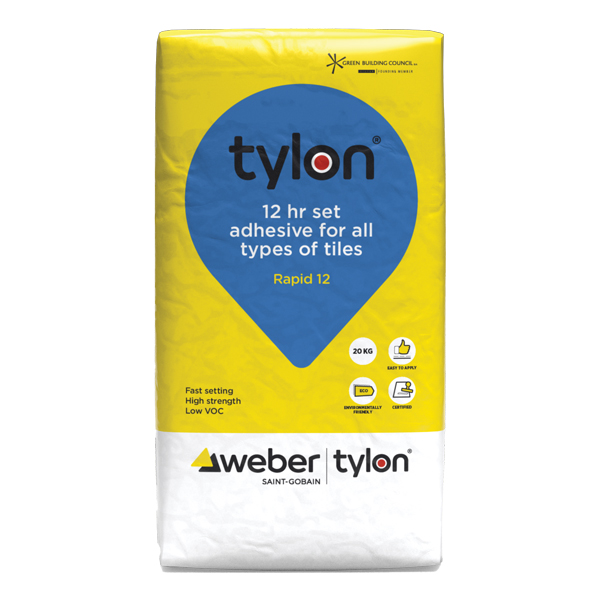
Rapid 12
Rapid 12 - A high-strength, rapid-setting adhesive suitable for all tiles.
C2F Classification
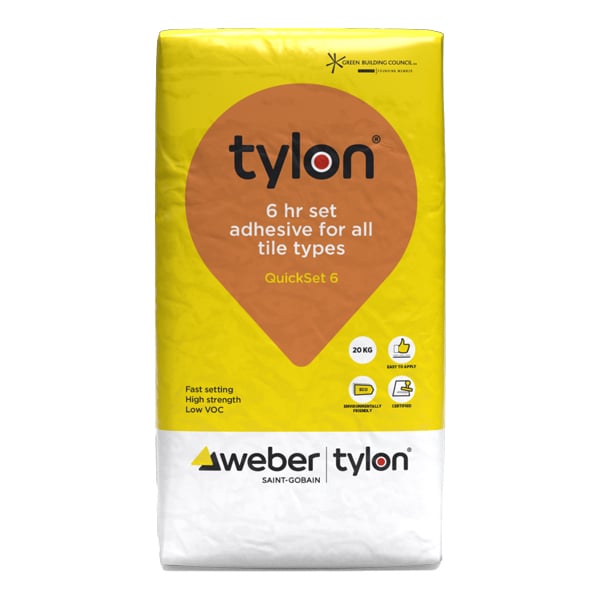
QuickSet 6
QuickSet 6 A fast-setting adhesive for fixing ceramic, porcelain, brick, cement, and clay tiles with a thickness range of 3 – 20 mm.
C2F Classification
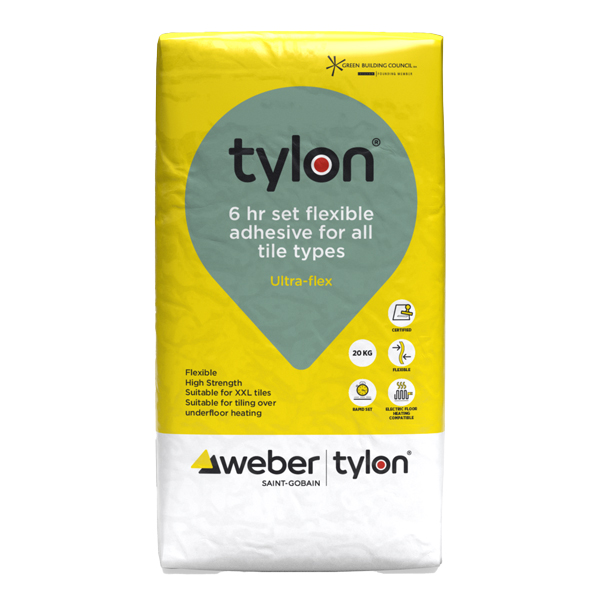
Ultra-flex
Ultra-flex This adhesive is designed to absorb lateral movement, making it perfect for larger format tiles. It's fast-setting and reduces the underlying causes of popping tiles.
C2FS2 Classification
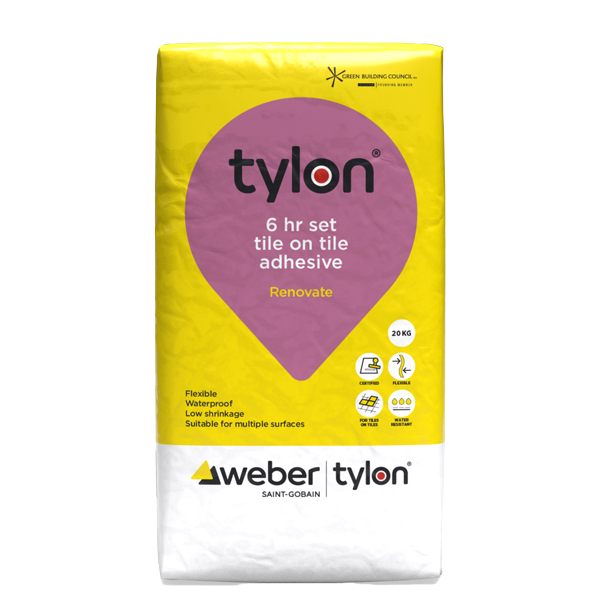
Renovate A waterproof adhesive designed for tiling over existing tiles and fixing crystalline marble tiles, coarse crystalline natural stones, polished porcelain, and ceramic tiles.
C2FS2 Classification
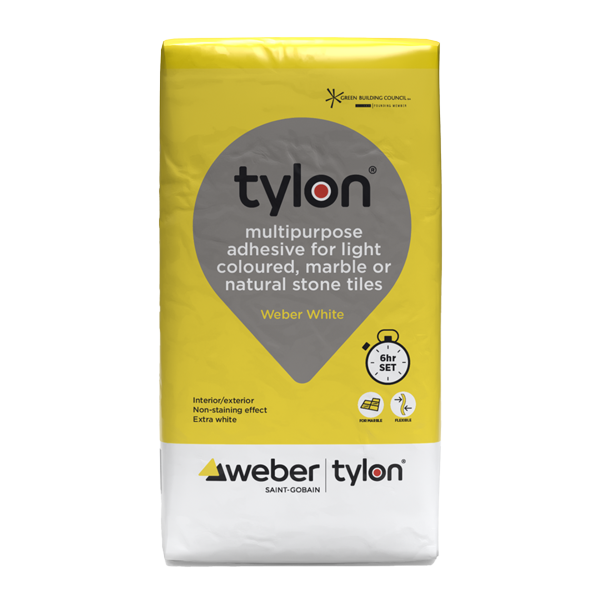
Weber White
Weber White A white cement-based, fast-setting, deformable tile adhesive suitable for marble porous, light natural stone, and porcelain tiles.
C2F Classification
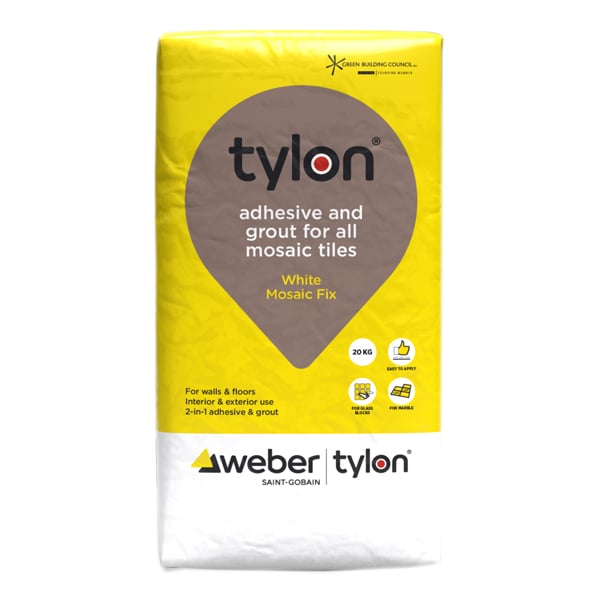
Mosaic Fix
Mosaic Fix This superior adhesive and grout is recommended for tiling showers, walls, and splash backs with mosaic tiles.
C2 Classification

Flawless tiling solution
Selecting the right adhesive is crucial for the success and longevity of your tiling project but achieving a flawless tiling solution is the 3rd step in grouting. Grouting is essential as it protects against cracking, uneven tiling, and the accumulation of debris between tiles, which can lead to tiles popping out. For the best results, it's recommended to use Weber Tylon Grout mixed with Weber Tylon Bond-It instead of water to enhance strength and waterproofing properties significantly.
Tiling is crucial for home design and functionality. To ensure tiles stay in place, hire an experienced installer, and use high-quality Weber Tylon tile products.
By giving importance to these key elements, you can create a tiling project that not only looks great but also lasts for a long time and does not “pop” out of place.
Reference check list to prevent tiles from popping
| Substrate/Sub-Construction: |
- Type of substrate/binder - Substrate age - Surface of substrate - Stability - Moisture content - Indoor/outdoor installation - Floor/wall/ceiling |
| Heated Substrate: |
| - If the substrate is heated |
| Tiles: |
- Type of tile (ceramic, porcelain, natural stones, others) - Quality of tile (glazed/unglazed) - Porosity - Weight - Colour - Intended application (floor tile/wall tile) |
| Application Field: |
- Standard room/wet room/water container - Terrace/balcony/façade - Others |
| Application Conditions: |
- Weather (rain/direct sunlight) - Temperature |
| Products: |
- Suitable tile adhesive (C1, C2) - Consumption of tile adhesive - System (waterproofing or decoupling + tile adhesive) - Suitable grout (joint width, abrasion resistance) - Kind of grout |
| Application Skills: |
- Correct use of products/selection of products - Respecting application technology and product consumption - Correct mixing of products - Correct addition of mixing water - Correct mixing ratio - Correct substrate preparation - Waiting periods between working steps (drying time) |
| After Tiling: |
- Traffic loads - Weather loads - Contamination (dirt/mould) |